Showing posts with label Writing. Show all posts

Tuesday, November 6, 2018

Wednesday, July 12, 2017

Exploring the Writing - Gardening Connection Guest Post by @KWilkinsAuthor


Exploring the WritingGardening Connection 
By Kelli A. Wilkins 

One day after working in the yard, I stood back and took a look at my handiwork. I had just finished pruning my lilacs and weeding a huge flowerbed. Everything seemed to be glowing and vibrating with a renewed energy. The yard looked better and felt better. 
I always feel kinda bad about cutting back the lilacs, but then I thought, “The pruning needs to be done, otherwise everything gets overgrown and suffocated.” 


Then it dawned on me that I’ve been doing the same thing with my writing—pruning and weeding what’s been long overgrown. 
For the last two years I’ve been in a cycle of re-releasing my romances previously published by Amber Quill Press (while writing new books). I’m rediscovering the stories and characters after being away from them for many years. Each book is being revised, re-edited, and in some cases, parts are completely rewritten.  
I’ve deleted scenes that no longer work, added new ones, and given each story a pruningof dialogue tags, excess words, too many exclamation points, and yanking other weeds that need pulling from these gardens. As a result, the books are stronger and better than ever. (And most have fabulous new covers.) 
If you’re editing a short story or a novel, ask yourself, “What is necessary to this scene? What can I cut?” You might be amazed to find that tightening a scene or a chapter makes it stronger and helps the story flourish in the long run.  
But I’m not stopping my “pruning” process with my books. I’m also weeding out other things in my writing world that are overgrown and need to go—old market guidelines, bits and pieces of story ideas that I no longer need, short romance stories that never went anywhere… the list goes on. I’ve sorted through about a hundred file folders and recycled bins full of paper. And I’ve extended this to my electronic world by deleting unnecessary files and updating my blog and website. 
It’s refreshing to have less stuff to maintain. I now have a clearer path to what I want to work on next, and I’m not bogged down with clutter or overwhelmed by writing weeds. 
Each spring, I ask myself a few questions about my flowerbeds: What do I want to plant? Where? What died off over the winter that needs to be replaced? I’m asking these types of questions about my writing life too, wondering: What do I want to write next? Do I want to go back to writing horror stories for a while? Finish my next three romance novels? Should I take some time off from writing?  
I don’t have all the answers yet, but I’ll sit in the garden and think about them! 
Writing a novel or a short story is a lot like planting a flowerbed. First, you need an idea or a basis for the story (a place where you’ll plant). Then you start the hard work, writing the book (digging and planting). After your first draft is finished (your flowers are blooming), you have to edit and revise your work (weed and prune as needed!). Once that’s all done, you’ll move on to marketing your story (inviting friends over to see your flowers). 
Writing and gardening take time, energy, and commitment, but in the long run, the results are worth it. After a long day, you can sit back and admire all your hard work. 
Enjoy the summer! 
Kelli 


ABOUT THE AUTHOR 
Kelli A. Wilkins is an award-winning author who has published more than 100 short stories, 19 romance novels, and 5 non-fiction books. Her romances span many genres and heat levels.  
Her third gay romance, Four Days with Jack, was released in June 2017. Kelli’s trilogy of erotic romance novellas, Midsummer Night’s Delights, Midwinter Night’s Delights, and Ultimate Night’s Delights was published in spring 2017.  
Loving a Wild Stranger was published in January 2017. This historical/pioneer romance is set in the wilds of the Michigan Territory and blends tender romance with adventure. 
Kelli's third Medallion Press romance, Lies, Love & Redemption was released in September 2016. This spicy historical western is set on the Nebraska prairie in 1877. 
Her writing book, You Can Write—Really! A Beginner’s Guide to Writing Fiction is a fun and informative guide filled with writing exercises and helpful tips all authors can use. 
Kelli posts on her Facebook author page: https://www.facebook.com/AuthorKelliWilkins and Twitter: www.Twitter.com/KWilkinsauthor 
She also writes a weekly blog: http://kelliwilkinsauthor.blogspot.com/ 
Visit her website, www.KelliWilkins.com to learn more about all of her writings, read book excerpts, reviews, and more. Readers can sign up for her newsletter here: http://eepurl.com/HVQqb. 


CATCH UP WITH KELLI 

Here are a few links to find Kelli & her writings on the web 
Amazon Author Page: www.amazon.com/author/kelliwilkins 
Website: http://www.KelliWilkins.com  
Newsletter sign-up: http://eepurl.com/HVQqb 


Wednesday, August 6, 2014

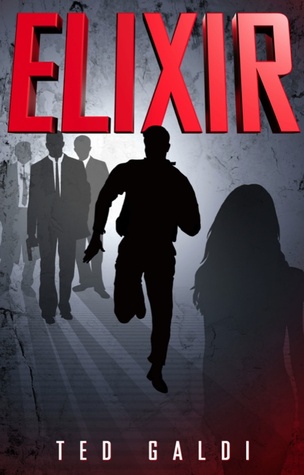
Guest Post #Writing Elixir by Ted Galdi

Welcome to Colorimetry...

Elixir
Elixir
by Ted Galdi

Meet 14-year-old Sean Malone. He has an IQ above 200, a full-ride scholarship to one of the country’s top universities, and more than one million dollars from his winning streak on Jeopardy. However, Sean wishes he could just be normal.

But his life is anything but normal. The US government manipulates him, using him as a codebreaker in pursuit of a drug lord and killing innocent people along the way.

For reasons related to his personal security, Sean finds himself in Rome, building a new life under a new name, abandoning academics, and hiding his genius from everyone. When he’s 18 he falls in love. The thrills begin again when he learns that his girlfriend is critically ill and it’s up to him to use his intellect to find a cure, a battle pitting him against a multi-billion-dollar pharmaceutical company and the demons of his past.

Elixir is a story about identity, secrets, and above all, love.


Book trailer: http://www.youtube.com/watch?v=_ofmjw5SC_I
Goodreads page: https://www.goodreads.com/book/show/21947952-elixir
Three-chapter preview: http://www.elixirthebook.com/preview.html
Advance reviews: http://www.elixirthebook.com/reviews.html


Balancing Plot, Relatability, and Message

The three major components of the quality of any novel are plot, relatability, and message.  Unfortunately, there is no optimum formula for weighing and mixing them, which is why so many books fall flat.  Here is what each means:

·         Plot = The events happening in the world of the story.  Ex: a crook preparing to rob a bank.

·         Relatability = The ability for the reader to emotionally connect with the characters involved in the book’s events, and thus, care about the plot.  Ex:  we find out the crook is robbing the bank because he needs the money to pay for his son’s college education.

·         Message = The implied commentary on the “world” that the author makes at the end of the story, based on how things have settled plot-wise.  Ex: the crook gets killed during the robbery, which stresses the universal message: Crime doesn’t pay, even if your intentions are good.  On the other hand, if the robber were to get away clean, pay the tuition bills, and then safely retire from his criminal past, the message would be quite different: Crime may be worthwhile if the ends justify the means.

Clearly, all three of the components are intertwined.  The success of the “message” depends directly on the end state of the “plot,” and the only way people care about the plot – and finish the story – is if “relatability” is built into the characters.  Many books do a great job with one of the components, maybe two, however, unless all three are working in harmony, the net effect is always underwhelming.

For instance, we’ve all read a mystery where we’re dying to turn each page and can’t wait to find out what happens next.  However, once we get to that final page, and we find out “whodunnit,” the book immediately leaves our minds; we can’t even remember the name of the protagonist the next morning.  Stories like these do a good job with plot, but fail with relatability and message.

Moreover, we’ve all been recommended a book with funny and quirky contemporary characters we fall in love with.  However, though their jokes may be great and they remind us of people we know in real life – maybe even ourselves – it doesn’t seem like they’re actually doing much but sitting around and talking, even if what they’re saying is interesting.  These books are high on relatability, but low and plot and message.

Finally, we’ve all had an experience with a well-intentioned book aimed at tackling some major social issue.  It makes big, sweeping claims for a moral revolution, however, by the end, we’re just not that motivated to get behind the cause.  We got the feeling we weren’t experiencing characters in their own world, but rather, listening to the author talk to us directly in his or her own words.  Though these books may be putting forward a great message, it doesn’t have any bite because we haven’t been convinced of it by the actions of characters we care about – hence, a lot of message, but no plot or relatability.

Yes, certain genres of novels lend themselves more toward certain components, and it may be difficult for authors to blend each.  However, truly great books – from any category – are able to find a distinct harmony among the three.

When a story is able to succeed with the right balance, the results are extraordinary.  For instance, Kurt Vonnegut does a terrific job achieving equilibrium between the three with his classic, Slaughterhouse-Five.  Not only does the plot move fast and through various interesting, unique settings, but we care deeply for our innocent/crazy/regretful/hopeful hero, Billy Pilgrim, throughout all the action.  By the time the story ends, Vonnegut’s message about war is crystal clear and powerful.  And that message – and the book itself – has had a lasting effect on generations.


Ted Galdi is the author of the novel Elixir, to be released in Summer 2014.  Learn more at www.elixirthebook.com.


Elixir is Ted Galdi's first novel. He's a graduate of Duke University. Currently he's twenty-nine years old and lives in Los Angeles. He can be contacted at ted@elixirthebook.com.

Author bio: http://www.elixirthebook.com/author.html
iHeartRadio author interview: http://www.spreaker.com/user/arroe/author-ted-galdi-elixir
Facebook page: https://www.facebook.com/elixirthebook

Friday, August 16, 2013

Layin' Down Some Paint... and loving oxygen.

I've been around paint & bodyshops for years. I know lots of ways painters protect their lungs from the chemicals in paint while they spray it... I know (some) about all the different toners, how colors are created in different ways. Some of this stuff is in my book. In a paranormal romantic setting. Lol.

Here's a retired police Tahoe that someone removed the stripes off of, but it took off some of the paint. We're (as in my Cool, Man is) fixing it for 'em.


My job (you wondered if I worked at all, didn't you?) is to mask vehicles for paint. Let me draw your attention to the geometric designs. 0.0  Ok... so I'm random about everything. Lol. I use a lot of tape. We listen to The Brew radio station, and those rock songs of a few decades back will always mean "hangin' out with my man chatting about odd (no)things" to me.  LOVE!


This is me!!!  This is the first time I stayed in the booth and helped lay down the primer over all those black-ish areas. Then Cool, Man sprayed base-coat white over everywhere we had primered... and then sprayed clear-coat over the entire panel. (Details included in case you're ever thinking of fixing a spot on your door, or anything. You're welcome!)

Cute mask, no?

Oooh... shiny!


Voila!  Like new!  :-)

Photo: All Done

What I did not know...

I helped spray a big truck (again) last night and there are a few things that I had just blown off as "a bad day" after this experience pictured.

 1. The spray gun with the paint in the canister is heavier than it looks when Cool, Man sprays and squeezing the trigger while focusing on the angle, etc, etc, takes a lot of energy.

 2. I was exhausted afterwards. Like I could hardly stand another minute. It was hard to lift my arms, hard to remain standing. I just wanted to go find somewhere to sleep it off. NOW.

This time I mentioned how I felt to Cool, Man. He says:
"Oh yeah. It takes awhile to get used to the lack of oxygen."
What?!

All of a sudden, I'm analyzing how I feel a totally different way:  Heavy limbs, slow thoughts, lack of energy, need to sleep... "symptoms of lack of oxygen".

Gold mine for a writer!!!  Score!  Some things you need to experience to understand.

Question:  Do people who live in high elevations feel this way?  How many situations would it be natural to feel a lack of oxygen?

And finally... May I please wear an oxygen tank next time?  'Cause I really, really, really (really-really-really-really-really) like oxygen.